

Description
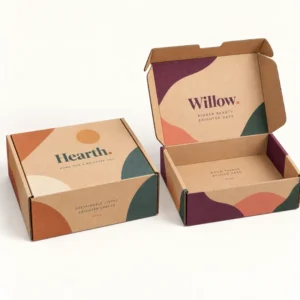
Letterbox Postal Boxes are low-profile mailing boxes for products that need more protection than an envelope without the bulk of a standard parcel carton. They suit UK ecommerce, subscription and retail orders containing slim items such as stationery, accessories, printed goods and samples, especially when businesses want compact packaging that is easier to post and receive.
Why Letterbox Postal Boxes matter for UK businesses
A small delivery does not always need a deep shipping box. Extra depth can let products move around and increase filler use. A slim box keeps the pack closer to the item, so the contents have less room to shift.
Letterbox-friendly packaging can also support unattended delivery because a suitable pack may pass through a door letterbox. However, residential letterboxes vary in size. A letterbox-friendly box should therefore use a sensible low-profile format rather than promise that one size will fit every door.
Postage classification needs a separate check. The Royal Mail Large Letter size limits are 353 × 250 × 25 mm, with the general Large Letter help page listing a maximum weight of 750 g. If you want a box to use that format, check the packed external dimensions rather than the empty internal size. Service-specific limits can vary, so confirm the service before production.
Businesses sending several compact formats can compare Postal Boxes by Size when choosing suitable footprints.
Practical features that make a letterbox box work
Depth matters more on letterbox packaging than on many ordinary mailers. A few extra millimetres can change the product fit and the delivery format you can use. Therefore, the box should start with the packed item rather than a generic size name.
Useful structural features include:
- Low-profile construction: Keeps the parcel slim while giving the contents a rigid outer shell.
- Close internal fit: Reduces movement and can limit the amount of loose filler needed.
- Locking or tuck closure: Holds the mailer together without adding unnecessary lid depth.
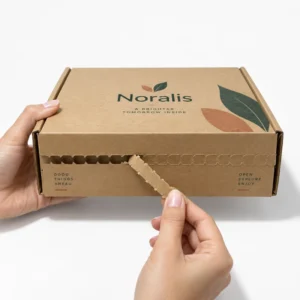
- Optional self-seal strip: Can speed up repeated packing where the structure supports it.
- Tear-open feature: Gives the customer a clear opening point without excessive tape.
A die-cut mailer can arrive flat and fold into shape when needed, which helps with storage.
Which materials suit slim postal packaging?
Corrugated cardboard is a practical choice for Letterbox Postal Boxes because its fluted layer adds stiffness without requiring a heavy solid structure. Fine-flute corrugated board can work well for shallow mailers because it keeps the profile neat while protecting edges and flat products.
The exact board should follow the contents. A lightweight notebook has different needs from a set containing hard components. As a result, product weight, fragility and required depth should guide the specification.
Kraft gives a natural brown surface and works well with restrained print. White liners provide a brighter base for colour artwork. Buyers can also review Corrugated Boxes before choosing the final board.
For very shallow products, every layer inside the box matters. Thick cushioning or an oversized insert can use valuable depth, so plan internal protection with the outer box.
Custom sizes, closures and internal fit
A “letterbox box” does not describe one universal dimension. The internal length and width should follow the product, while the depth needs enough clearance for packing without creating unnecessary space.
Realistic options can include custom length, width and depth, locking front tabs, self-seal closures, tear strips, dividers and shallow cardboard fitments. Inside printing can also work on suitable constructions. However, each feature should solve a practical need.
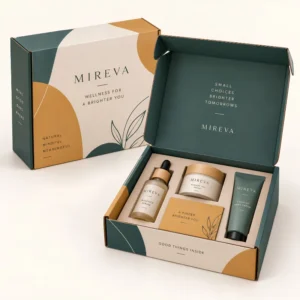
For example, a card set may only need a close-fitting outer box. A small accessory kit may benefit from a divider. Meanwhile, a presentation sample set may need a shallow insert, provided the total depth still suits the intended delivery method.
Custom Mailer Boxes are worth considering when a project needs a hinged opening, broader depth range or more presentation space.
Printing Letterbox Postal Boxes clearly
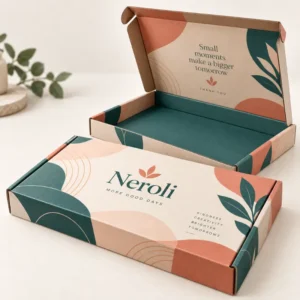
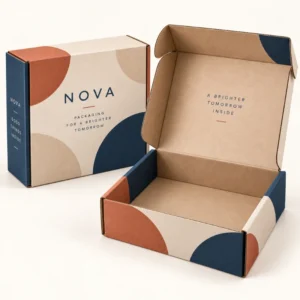
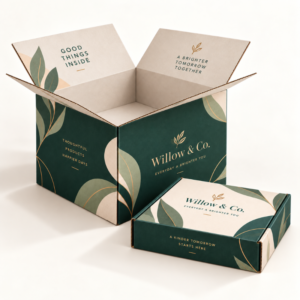
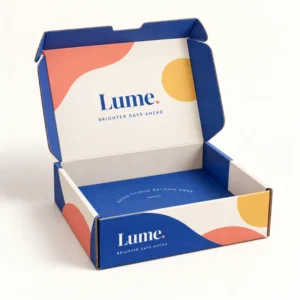
A shallow box still gives useful branding space, but artwork needs to respect folds, tabs and narrow side panels. Simple layouts often read better because the customer sees the lid first.
Digital printing can suit shorter runs or artwork with several colours and fine detail. Flexographic printing can work well for simpler graphics on corrugated board. For projects needing a smoother printed face, litho-lamination may provide another route.
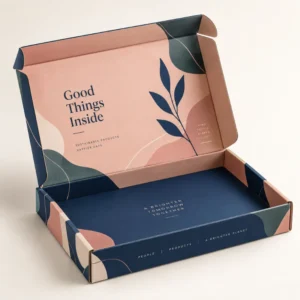
CMYK supports full-colour artwork, while Pantone references can help with specific brand colours. Inside print can also carry a short message or instructions beneath the lid.
Finishes depend on the print surface and end use. Matt or gloss lamination can alter the surface, while foil, spot UV, embossing or debossing may suit presentation-focused work. However, extra finishes should not make a slim postal pack unnecessarily complex.
Free design support helps buyers position artwork around creases, closing tabs and safe print areas before production.
What products suit letterbox-friendly boxes?
The format works best for products that are relatively flat and do not need a deep protective cavity. Common applications include:
- stationery, notebooks and card sets;
- photographs, prints and other flat paper goods;
- socks, ties and compact textile accessories;
- jewellery packs and small non-fragile accessories;
- phone cases, cables and slim technology accessories;
- sample packs, membership kits and subscription items.
Product shape still matters. A soft textile item may only need a neat outer box, while a hard accessory may need a divider or cushioning. Fragile glass, bulky products and items with projecting parts may need a deeper format instead.
For businesses building a wider postal range, the Custom Mailer Boxes category can help compare other mailer structures alongside this slim format.
Why choose Custom Postal Boxes?
In-house manufacturing gives Custom Postal Boxes direct control over the approved size, structure and print specification as the job moves into production. That matters with letterbox packaging because small changes in depth can affect product fit and the final parcel format.
Free design support helps buyers prepare artwork around the actual dieline rather than guessing where folds and closures will sit. As a result, the layout can be checked before manufacturing begins.
Once production is complete, fast and free UK delivery supports the final stage. Production timing depends on quantity, print, finish and structural requirements.
How to order custom Letterbox Postal Boxes
- Measure the packed product: Include any inner wrap, sleeve or protective layer.
- Confirm the quantity: This helps identify a suitable production and print route.
- State the delivery goal: Mention if letterbox delivery or a Royal Mail size format matters.
- Choose the board: Select the structure and liner according to weight, protection and artwork.
- Confirm the closure: Choose a tuck lock, self-seal strip or tear-open feature where suitable.
- Plan internal support: Add a divider or shallow insert only where needed.
- Supply artwork: Share logos, colours and inside or outside print requirements.
- Review and approve: Check dimensions, material, print and proof before manufacturing.
- Receive the order: Finished boxes move to UK delivery after production.
Frequently asked questions about Letterbox Postal Boxes
Will Letterbox Postal Boxes fit through every UK letterbox?
No. Door letterboxes vary, so one box size cannot guarantee a fit through every property. Keep the pack genuinely low-profile and choose dimensions around the product. If a postal service format matters, check its current external size and weight rules as well.
Are letterbox boxes the same as Royal Mail Large Letter boxes?
Not necessarily. “Letterbox box” describes a delivery-friendly packaging format, while Large Letter is a Royal Mail postal classification with specific limits. A letterbox box may fit those limits, but only its packed external dimensions and weight can confirm that.
What can I send in a letterbox postal box?
Slim, lightweight products usually suit this format best. Examples include stationery, prints, card sets, accessories, phone cases, socks and sample packs. However, the box still needs enough protection for the actual product. Fragile or bulky contents may need a deeper package.
Can Letterbox Postal Boxes be made to custom sizes?
Yes. Custom dimensions can follow the packed product more closely than a stock box. This helps control empty space and lets you plan the depth around the intended delivery method. Share packed product dimensions when requesting a quotation.
Can I have my logo printed on letterbox boxes?
Yes. Suitable surfaces can carry a logo, brand colours, product information or other artwork. You can also discuss inside printing where the structure supports it. Because the box is shallow, clear artwork with sensible spacing often works best.
Do letterbox boxes need inserts?
Not always. A close-fitting box may provide enough control for many flat or non-fragile items. An insert or divider becomes useful when you need to separate parts, hold an item in position or improve presentation. Keep the insert shallow if overall depth matters.
Can letterbox postal boxes use self-seal and tear strips?
Yes, suitable mailer structures can include self-seal and tear-open features. A self-seal strip can make repeated packing quicker, while a tear strip gives the recipient a clear opening point. Confirm the exact closure with the box structure before production.
Request a quotation for Letterbox Postal Boxes
Share your packed product dimensions, quantity, artwork and preferred closure with Custom Postal Boxes. If a particular postal size matters, include that requirement from the start. The team can then prepare a specification that balances fit, protection, printing and the low-profile format you need.












Reviews
There are no reviews yet.