Corrugated Boxes
Showing all 4 results
-
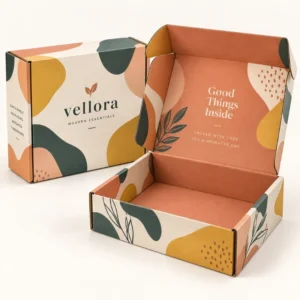
Corrugated Mailer Boxes
Get a Quote -
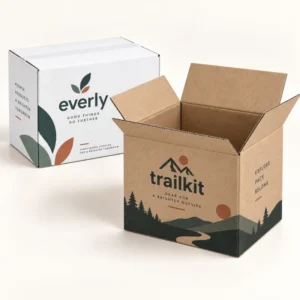
Corrugated Shipping Boxes
Get a Quote -
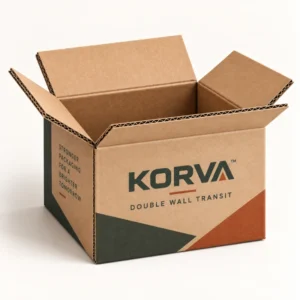
Double Wall Shipping Boxes
Get a Quote -
Single Wall Corrugated Boxes
Get a Quote
Explore corrugated boxes for shipping, storage, ecommerce fulfilment and product protection. This category covers fluted-board packaging for different product sizes, weights and handling needs, from lighter everyday orders to goods that need a stronger construction. Compare box styles, board options, print requirements and practical features before choosing a format. Custom sizing can control product movement, while branded print keeps shipping packaging consistent with your business from packing bench to delivery.
Corrugated packaging for different packing jobs
Corrugated boxes are a broad family of packaging rather than one box style. Their board uses a fluted paper layer between flat liners, which gives the material useful rigidity for packing and transport. Single wall board uses one fluted layer; double wall adds another fluted section for jobs that call for more strength.
That difference matters in practice. A light ecommerce order does not need the same construction as a heavier product facing repeated handling. Some businesses need straightforward slotted cartons. Others prefer die-cut mailers, trays or dividers because presentation and product position matter more.
If you are comparing related ranges, Custom Shipping Boxes focus on dispatch-led formats, while Custom Mailer Boxes cover self-closing styles commonly used for ecommerce orders. The wider Packaging Materials section is also useful when you are still comparing board types.
How to choose Corrugated Boxes for your products
Start with the packed product. Measure the item and allow for any protective wrap, insert or divider that will sit inside. An oversized carton can create unnecessary empty space, while an overly tight fit may make packing awkward or leave too little room for protection.
Next, consider weight and handling. Single wall corrugated board works for many routine packing jobs. Double wall construction makes more sense when the load, stacking pressure or journey demands greater rigidity. However, the full specification should consider dimensions, contents and transport conditions together.
Think about the journey as well. A box moving between business sites faces different handling from a parcel moving through a courier network. For postal services, check the final packed dimensions and weight against the carrier’s current rules before production.
Finally, look at the packing process. Regular slotted cartons are practical for straightforward dispatch and usually close with tape. Die-cut formats can use locking tabs, tuck fronts or shaped panels where a quicker pack or cleaner opening experience matters.
Board construction, liners and box styles
The board specification affects strength, appearance and print behaviour. Kraft-facing corrugated board gives a natural brown surface, while white-facing board can provide a cleaner base for certain printed designs. The right choice depends on structure, print method and appearance.
Corrugated Boxes can include slotted cartons, die-cut mailers, trays, sleeves and structures with internal divisions. FEFCO box styles also give packaging teams a recognised way to discuss common corrugated constructions without relying on vague descriptions.
For products that need a lighter folding-board format rather than fluted construction, Cardboard Boxes may be a more relevant category to compare.
Sizes, inserts and practical customisation
Custom dimensions help when standard sizes leave too much movement around the product. A closer fit can make packing neater and reduce unnecessary internal space. However, the internal dimensions must include any cushioning, dividers or presentation inserts used with the product.
Useful options may include dividers for multi-item packs, die-cut inserts for controlled placement, tear-open features or peel-and-seal closures where the chosen box structure supports them. These features should solve a packing, transport or opening requirement rather than simply add complexity.
If you are unsure how artwork will sit across folds, panels or locking areas, free design support can help organise the branding on the dieline before production.
Printing and finishing for corrugated packaging
Printing should suit both the board surface and the artwork. Flexographic printing often works well for direct print and simpler graphics. Digital printing can suit shorter or more varied work, while lithographic print can provide detailed graphics on a printed sheet mounted to corrugated board.
CMYK supports full-colour artwork, while Pantone spot colours can help when closer brand-colour control matters. The appropriate process depends on quantity, artwork, board and the finish you want.
Some printed corrugated boxes can also use varnish or lamination on a suitable printed liner. Effects such as foil, embossing, debossing or spot UV may work with certain constructions, but compatibility should be checked first.
Where corrugated boxes make sense
Businesses use corrugated packaging for ecommerce dispatch, subscription orders, homeware, bottled goods, spare parts, small appliances, retail multipacks and business-to-business shipments. The common need is a box with enough structure for the product and the way it will be handled.
A compact mailer may suit a lighter direct-to-customer order. Meanwhile, a taped shipping carton may be more practical for bulkier goods. Dividers can separate several items in one case, while an insert can hold one product in a more controlled position.
Corrugated Boxes also suit businesses that need several sizes for different order profiles. Separate specifications keep each pack closer to its contents instead of forcing many products into one carton.
Why order from Custom Postal Boxes?
In-house manufacturing gives Custom Postal Boxes control over key production details such as dimensions, structure, print placement and box specification. This is useful when an off-the-shelf size does not match the way your product needs to be packed.
During artwork preparation, free design support can help place logos, text and graphics on the correct panels. Once production is complete, fast and free UK delivery keeps the final stage straightforward for businesses receiving their packaging.
How to request a quotation
- Tell us what you are packing and how the box will be used.
- Provide the product or required internal dimensions.
- Confirm the quantity.
- Choose a box style or describe the opening and packing method.
- Share any preferred board appearance or construction requirement.
- Explain your printing needs, including colours and print coverage.
- Add any insert, divider, closure or finishing requirements.
- Send available artwork, logos or brand references.
- Review the quotation, specification and proof.
- Approve the artwork before manufacturing and UK delivery.
Frequently asked questions
What are corrugated boxes made from?
Corrugated boxes use fluted paper between flat liner sheets. The fluting gives the board rigidity and helps it hold its shape during handling. Single wall board has one fluted layer, while double wall board uses two. The best construction depends on the product, pack size, stacking and journey.
What is the difference between single wall and double wall corrugated board?
Single wall board contains one fluted layer between two liners and suits many everyday packing jobs. Double wall adds another fluted layer and liner, creating a stronger structure for more demanding loads or handling. Box size, product weight, stacking and transit conditions should all guide the choice.
Can Corrugated Boxes be made to custom sizes?
Yes. Corrugated packaging can be produced around required internal dimensions and the chosen structure. Include any wrap, insert or divider when measuring the space needed. A closer-fitting box can reduce unnecessary movement, although enough clearance must remain for practical packing and protection.
Can corrugated packaging be printed with branding?
Yes. Depending on the board, artwork and quantity, suitable methods can include flexographic, digital or lithographic printing. Branding can range from a simple logo and handling information to full-colour graphics. Choose the print process after confirming the board and box construction.
Which corrugated box style is best for ecommerce orders?
It depends. The product and packing process should guide the choice. Die-cut mailer formats can suit smaller direct-to-customer orders where opening and presentation matter. Slotted cartons often suit straightforward shipping and larger loads. Compare size, fragility, packed weight, closure method and carrier handling before choosing.
Can inserts or dividers be added to corrugated boxes?
Yes, where the structure allows them. Dividers can separate several products, while die-cut inserts can reduce movement or organise the contents. Because inserts take up space, include them when calculating the internal dimensions of the outer box.
Choose your corrugated packaging specification
Browse the Corrugated Boxes category to compare suitable structures, then send your dimensions, quantity, print requirements and packing details for a quotation. If you are unsure which construction fits your product, start with the item and how it will travel. From there, the box specification can be built around the practical job it needs to do.