
Description
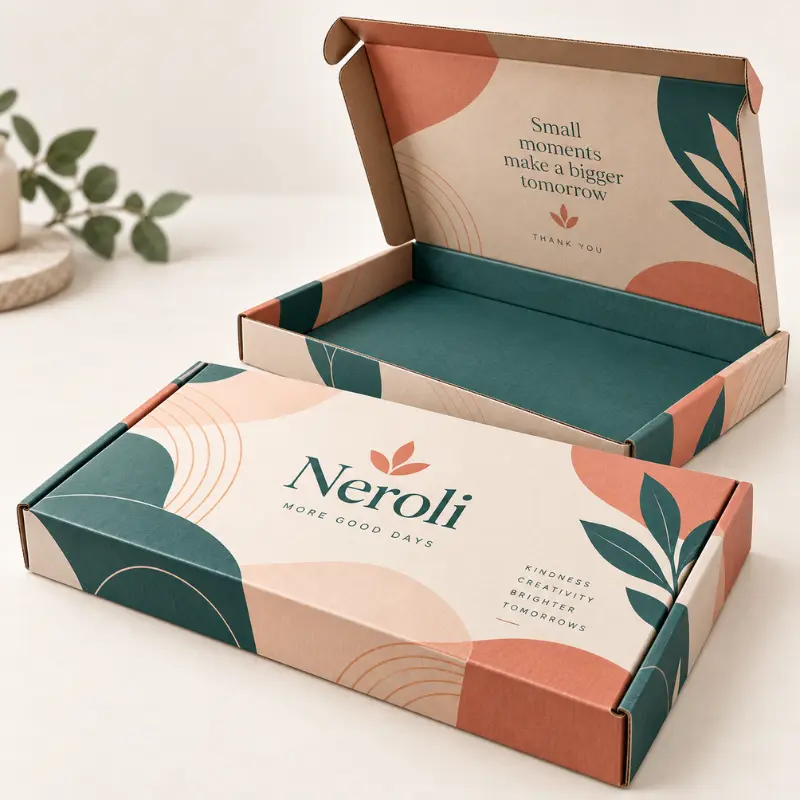
Large Letter Postal Boxes are slim cardboard mailing boxes made for products that need more protection than an envelope while staying within a shallow postal format. They suit UK ecommerce orders, printed goods, accessories and other compact items where businesses want a secure pack that uses space efficiently and can meet Royal Mail Large Letter limits when correctly specified.
Why Large Letter Postal Boxes matter for UK businesses
Postage size can influence the whole packaging specification. The Royal Mail Large Letter format allows a maximum size of 353 × 250 × 25 mm and a maximum weight of 750 g. These limits apply to the finished, packed item rather than the product or empty box alone.
Depth matters most. A box can sit within the maximum length and width yet move into another postal format if the packed depth exceeds 25 mm. Therefore, the board, product, insert and protective material all need to work within the same allowance.
For businesses sending flat or compact goods, a carefully sized box can reduce unused space and avoid a deeper parcel carton. Buyers comparing several footprints can also review Postal Boxes by Size before choosing the final format.
What makes a good Royal Mail Large Letter box?
So, a good box needs to protect the item while keeping the finished pack shallow. That means the structure should support the product without wasting depth.
Useful features include:
- Low-profile construction: Keeps the pack close to the product and helps control final external depth.
- Corrugated protection: Fluted board adds rigidity around flat or compact contents without a bulky carton.
- Tuck or locking closure: Folded tabs can secure a mailer-style box without adding a separate lid.
- Optional self-seal strip: Where suitable, an adhesive strip can make repeated packing quicker.
- Tear-open feature: A tear strip gives the customer a clear opening point and can reduce extra tape.
Which board construction suits a 25 mm postal format?
Corrugated cardboard is practical for shallow postal packaging because the fluted centre adds stiffness between the liner papers. Fine-flute single-wall constructions can work well where the overall profile needs to stay slim. Current UK Large Letter box ranges commonly use shallow single-wall corrugated constructions for this purpose.
For that reason, the correct board still depends on the contents. A thin booklet needs less support than a hard accessory with sharp edges.
Meanwhile, Kraft liners give the box a natural brown appearance and work well with simple print. White outer liners provide a brighter base for detailed colour artwork. Buyers can also review Corrugated Boxes when board performance is a key part of the decision.
As a result, the internal size must allow for the board itself. If a postal format has a 25 mm external depth limit, the usable internal depth will be less than 25 mm. Therefore, measure the packed product before finalising the dieline.
Custom sizing without wasting valuable depth
Therefore, Large Letter Postal Boxes work best when the dimensions follow the item closely. A generic shallow box may leave too much room around a product or too little space for protection.
Realistic customisation options include:
- custom length, width and depth;
- tuck-front or locking mailer panels;
- self-seal closures where suitable;
- tear strips for controlled opening;
- shallow cardboard inserts or dividers;
- external printing, internal printing or both.
For example, an insert can help stop a product moving from side to side. However, every insert uses some internal space. Plan the outer box and fitment together rather than treating them as separate pieces.
In addition, businesses that need a wider range of hinged structures can compare Custom Mailer Boxes. That category is useful when presentation, internal space or opening style matters more than one postal size band.
Printing and finishes for slim postal boxes
Large Letter boxes provide useful branding space across the lid and main panels. However, a shallow structure benefits from a clean layout because narrow edges and closing tabs leave less room for secondary information.
Digital printing can suit shorter runs and detailed full-colour artwork. Flexographic printing can work well for simpler graphics on corrugated board. Litho-lamination may suit projects that need a smoother printed face or finer image reproduction.
Also, CMYK supports full-colour artwork, while Pantone references can help control specific brand colours. Internal printing can also add instructions or a short message beneath the lid.
Matt or gloss lamination can change the surface feel and appearance. Foil, spot UV, embossing or debossing may suit some presentation-focused projects. However, any finish, insert or added layer still needs to work with the final packed dimensions.
Free design support helps buyers position artwork around folds, tabs and safe print areas before production.
What products suit Large Letter postal packaging?
This format works best for products that are relatively flat, compact and light enough for the chosen postal service. Current UK packaging ranges commonly position Large Letter boxes for books, printed goods, cards, clothing accessories and compact ecommerce products.
Common examples include:
- notebooks, booklets and printed literature;
- greeting cards, photographs and art prints with suitable protection;
- socks, ties and other slim textile accessories;
- phone cases, cables and low-profile technology accessories;
- small stationery sets and craft components;
- sample packs and compact promotional kits.
However, product shape matters as much as size. A soft textile item may sit safely in a close-fitting box, while a hard component may need a divider. Fragile products may require cushioning, which can use too much of the available depth.
Choose the Large Letter format because it suits the packed item, not by forcing a product into a box that cannot protect it properly.
Why choose Custom Postal Boxes?
In-house manufacturing gives Custom Postal Boxes direct control over the approved dimensions, structure and print specification during production. That is useful for shallow packaging, where a small change in board or depth can affect the final fit.
Free design support also helps buyers prepare artwork around the actual box layout. The team can check graphics, folds and closure areas before production.
After manufacturing, fast and free UK delivery supports the final stage of the order. Exact production timing depends on quantity, print method, finishing requirements and the agreed specification.
How to order custom Large Letter Postal Boxes
- Measure the packed product: Include any inner wrap, sleeve or protective layer.
- Confirm the quantity: Order volume helps determine a suitable production and print method.
- State the postal requirement: Mention if the Royal Mail Large Letter format is essential.
- Choose the board: Select the structure and liner according to weight, protection and artwork.
- Plan the closure: Confirm tuck locks, self-seal strips or tear-open features where required.
- Allow for inserts: Include any divider or fitment when calculating usable internal depth.
- Supply artwork: Share logos, colours and inside or outside print requirements.
- Review the quotation and proof: Check dimensions, material, print and finish before approval.
- Approve production: Manufacturing begins once the specification and artwork are confirmed.
- Receive the order: Finished boxes move to UK delivery after production.
Frequently asked questions about Large Letter Postal Boxes
What is the maximum size for a Royal Mail Large Letter?
The maximum format is 353 × 250 × 25 mm with a weight limit of 750 g. Measure the parcel after packing because the external dimensions matter. A box that exceeds the depth limit can move into another postal category even when its length and width remain within range.
Can a rigid cardboard box qualify as a Large Letter?
Yes. A rigid box can qualify if the finished item stays within the relevant size and weight limits. The key issue is the packed external measurement. Choose a shallow structure that gives the product enough protection without pushing the finished depth beyond the required limit.
How much internal depth can a Large Letter box have?
The usable internal depth must be less than the 25 mm external limit because the board itself takes up space. The exact measurement depends on the chosen construction. Share the packed product depth first so the box can be specified around the actual item.
Can Large Letter Postal Boxes be custom printed?
Yes. Suitable surfaces can carry logos, brand colours, product information and other artwork. Depending on the construction, you can also discuss inside printing. Keep artwork clear around folds and locking tabs so important details remain easy to read after assembly.
Do Large Letter boxes need inserts?
Not always. A close-fitting box may protect a flat, non-fragile product without an insert. However, a shallow divider or fitment can help control grouped items or hard components. Plan the insert with the box because it reduces the available internal space.
What products work best in Large Letter boxes?
Flat, compact products usually work best. Typical examples include stationery, prints, notebooks, slim accessories, phone cases and sample packs. The product must still suit the available depth and weight allowance. Fragile or bulky items may need a different postal box format.
What should I provide when asking for a quotation?
Provide the packed product dimensions, quantity, preferred material, artwork requirements and any closure or insert details. Also say if Large Letter compliance is essential. That helps the specification account for board thickness, internal fit and final external size.
Request a quote for Large Letter Postal Boxes
Share your packed product dimensions, quantity, artwork and any closure or insert requirements with Custom Postal Boxes. If the Royal Mail size band is essential, state that at the start so the specification can be planned around the final packed dimensions.





Reviews
There are no reviews yet.