

Description
Corrugated Shipping Boxes use fluted paperboard to create protective transit cartons for ecommerce, warehouse and business distribution. Their liner-and-flute construction adds rigidity without excessive weight, while custom sizing helps control movement inside the pack. UK businesses can specify the wall construction, box style, print and internal protection around the product and delivery route.
Why Corrugated Shipping Boxes Work Well for UK Distribution
Shipping cartons face several stresses before they reach the customer. Packers stack them, couriers lift them, conveyors move them and vehicles expose them to repeated vibration. Therefore, the outer carton needs enough rigidity for the product and the way it travels.
Corrugated board handles these demands through its fluted structure. FEFCO describes corrugated board as flat liner papers joined to a fluted inner medium. As a result, the connected flutes create a light but rigid packaging material.
A closer internal fit can also reduce movement and limit the need for loose filler. However, buyers should not judge strength from appearance alone. Product weight, dimensions, fragility, stacking and handling conditions all affect the final specification.
Practical Features That Support Shipping Performance
A good corrugated shipping carton combines board strength, useful dimensions and a structure that suits the packing process.
- Fluted board construction: the flutes add stiffness and create cushioning between the liners.
- Custom internal dimensions: a closer fit can reduce movement and make protective materials easier to position.
- Single or double wall options: businesses can match the board to routine shipments or more demanding loads.
- Flat-packed storage: many transit case styles arrive flat, helping packing teams save storage space.
- Printable outer panels: logos, handling marks and product references can support branding and logistics.
- Optional internal fitments: corrugated pads, dividers and die-cut inserts can separate products or restrict movement.
These features should work together. For example, a stronger outer case will not remove the need for cushioning around a fragile product.
Which Corrugated Board Construction Should You Choose?
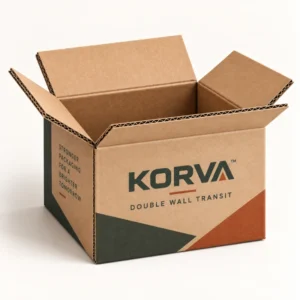
Single wall corrugated board uses one fluted layer between two liners. FEFCO identifies this as the most common corrugated construction. Double wall board uses two fluted layers with three liners, while triple wall adds a third fluted layer for more demanding applications.
Single wall can suit many routine ecommerce and distribution jobs. Meanwhile, double wall can provide more rigidity where heavier contents, stacking or rougher handling increase the load on the carton.
Flute profile also changes the behaviour of the finished board. Finer flutes can give a slimmer profile and smoother print surface, while deeper flutes provide different cushioning and stiffness characteristics. Therefore, the packed product should guide the flute choice.
Outer liners can use brown kraft-style or white surfaces. A white liner can give coloured artwork a cleaner base. However, liner colour alone does not indicate board strength.
Custom Sizes, Case Styles and Internal Fit
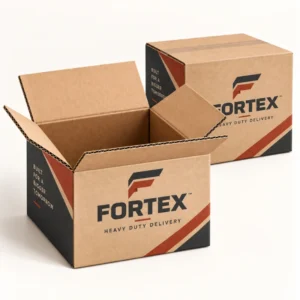
Corrugated Boxes can use several case constructions. Regular slotted cases remain common because teams can erect them quickly, load from the top and seal the flaps with tape. Die-cut shipping formats can add locking features or a more controlled presentation.
In addition, the FEFCO Code groups recognised corrugated case styles into a common system. This helps manufacturers and buyers describe structures more clearly.
Custom sizing should start with the product itself. Measure the required internal length, width and depth, then allow space for cushioning, dividers or inserts.
Useful structural options may include:
- corrugated partitions for separating several items;
- pads for layering products or adding local support;
- die-cut fitments for holding a product in position;
- hand holes where the load and case construction make them suitable;
- tape-sealed or selected locking closures according to the box style.
Every extra component should solve a packing or protection problem. Otherwise, it can add material and assembly work without improving the shipment.
Printing and Finishing for Branded Corrugated Boxes
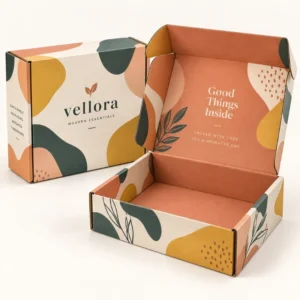
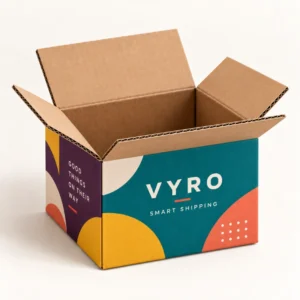
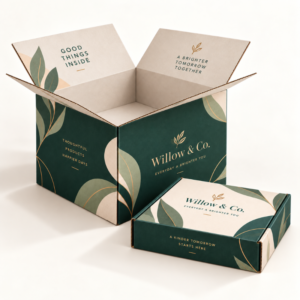
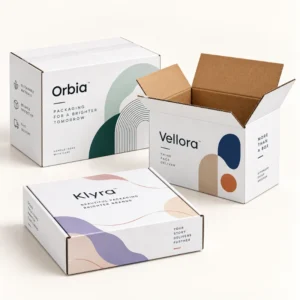
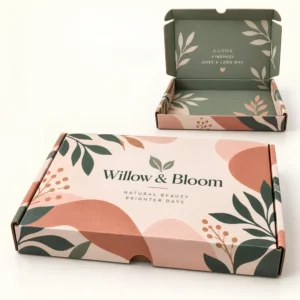
Printed corrugated shipping boxes can carry practical information as well as branding. Businesses may add logos, handling symbols, barcodes, product codes or campaign graphics to the outer panels.
Flexographic printing often suits straightforward logos, text and spot-colour work. Digital printing can support more detailed or full-colour artwork on compatible materials. In addition, lithographic printing can create detailed graphics before lamination to corrugated board.
CMYK supports process-colour artwork, while Pantone references help specify spot colours. Meanwhile, the liner surface affects the finished appearance, so brown kraft-style board and white board can produce different results.
Some presentation-led formats can also use varnish or lamination. Still, transit performance and readable artwork should come first on a shipping box.
Custom Postal Boxes provides free design support during artwork preparation. This can help position important graphics away from folds, joins, tape areas and cut lines before production starts.
Where Corrugated Shipping Packaging Makes Sense
Corrugated shipping packaging works across many sectors because businesses can change the box size, wall construction and internal support around the product. Typical applications include:
- ecommerce orders containing clothing, books, homeware or packaged retail goods;
- warehouse replenishment and business-to-business stock transfers;
- spare parts, tools and trade components with suitable protection;
- grouped products that need one outer transport case;
- subscription or promotional orders that require a protective shipping carton;
- fragile goods when the box works with cushioning or fitted inserts.
The correct specification varies by application. For example, a dense metal component may put more stress on the base than a larger but lighter textile order. Likewise, a fragile product can need careful cushioning even with a strong outer carton.
Businesses handling routine shipments can compare broader custom shipping boxes to find other transit structures. They can also review corrugated boxes when they need a wider choice of corrugated packaging styles.
Why Choose Custom Postal Boxes for Corrugated Shipping Boxes
Custom Postal Boxes manufactures packaging in-house. As a result, the agreed dimensions, board choice, structure and print specification stay closely connected with production. This matters when a small change in size or wall construction could alter product fit.
Free design support can help prepare artwork around the actual dieline. The design stage can account for flaps, joins, folds and visible panels before manufacturing begins.
Fast and free UK delivery then helps move finished boxes into your packing operation without a separate standard UK delivery charge. Production requirements still depend on quantity, dimensions, board, print coverage and structural details.
How to Order Custom Corrugated Shipping Boxes
A clear packaging brief makes it easier to assess the right board and structure:
- Describe the product. Share the product type, packed weight, fragility and areas that need extra protection.
- Provide internal dimensions. Give the required length, width and depth, including room for cushioning or inserts.
- Confirm the quantity. Order volume can influence the manufacturing and print route.
- Explain the distribution conditions. Mention stacking, pallet use, courier handling or warehouse storage where relevant.
- Choose the wall construction and box style. Match the board and case format to the packed product.
- Add internal protection where needed. Use pads, partitions or fitted inserts only where they improve the pack.
- Share artwork. Provide logos, colours, handling information and print coverage.
- Review the quotation and artwork. Check the dimensions, structure and print before production and UK delivery.
Frequently Asked Questions
What are Corrugated Shipping Boxes?
Corrugated Shipping Boxes are transit cartons made from fluted paperboard joined to flat liner sheets. The flutes add rigidity while keeping the material relatively light. Businesses use them for ecommerce, storage, warehouse transfer and courier distribution.
What is the difference between corrugated and ordinary cardboard boxes?
Corrugated board contains a fluted paper layer between liners, while thin paperboard or folding carton does not. As a result, corrugated material usually suits shipping tasks that need more rigidity. However, the required board grade still depends on the product and journey.
Should I choose single wall or double wall corrugated boxes?
Choose according to the packed load and handling conditions. Single wall can suit many routine shipments, while double wall can offer extra rigidity for heavier or more demanding applications. In addition, product dimensions, fragility, stacking and internal protection also matter.
Can Corrugated Shipping Boxes be made to custom sizes?
Yes. Custom internal dimensions can follow the product, cushioning and any fitted insert. A closer fit can reduce unwanted movement and excessive void fill. Provide the required internal length, width and depth for an accurate specification.
Can you print logos on corrugated shipping boxes?
Yes. Suitable corrugated boxes can carry logos, text, handling symbols, barcodes and other approved artwork. Flexographic, digital or lithographic methods may suit different jobs. Therefore, board surface, artwork detail, colours and quantity help determine the print route.
Can corrugated boxes include inserts or dividers?
Yes. Corrugated dividers, pads and die-cut fitments can separate products or hold them more securely. The right option depends on product shape, fragility and packing method. A fitted component should support the outer carton rather than compensate for poor sizing.
Are corrugated shipping boxes suitable for heavier goods?
They can be. Heavier or denser goods often need double wall board, stronger case design or additional internal support. However, there is no single weight rule for every carton. Dimensions, stacking, handling and the delivery route all influence the required specification.
Request a Quote for Corrugated Shipping Boxes
Send Custom Postal Boxes your internal dimensions, quantity, product details and print requirements for a quotation. Include weight, fragility and distribution conditions where relevant. We can then review the wall construction, box style and internal protection before production.











Reviews
There are no reviews yet.