

Description
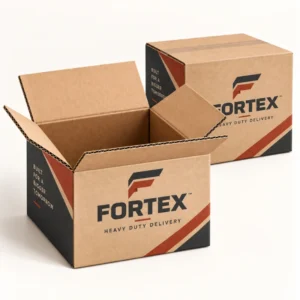
Cardboard Shipping Boxes use corrugated board to protect products during ecommerce fulfilment, courier delivery, warehouse transfer and business-to-business distribution. They suit UK companies that need practical outer packaging with custom sizes, suitable board strength and optional print. The right specification helps control movement, support handling and keep parcels efficient to pack.
Why Cardboard Shipping Boxes Matter for UK Businesses
Shipping packaging has to do more than contain a product. It must cope with lifting, stacking, conveyor handling and vehicle movement. At the same time, an oversized carton can create empty space and increase the amount of cushioning required.
A closer-fitting shipping box gives the product a more controlled space. As a result, packers can position protective materials more accurately and avoid filling large unused areas.
However, size alone does not decide performance. Product weight, fragility, dimensions, stacking conditions and the delivery route all influence the board specification. Therefore, businesses should choose the carton around the packed item rather than rely on a generic box size. Current UK suppliers also position made-to-measure shipping cartons around product dimensions, board strength and protective packing needs.
Practical Features That Improve Shipping Performance
Cardboard shipping cartons work well because corrugated board combines low weight with useful rigidity. The fluted paper layer creates space between the liners and helps the board resist bending and impact. FEFCO describes corrugated board as liner papers joined to a fluted inner medium to create a stronger combined structure.
Key practical options include:
- Custom internal dimensions: a closer fit can reduce unwanted movement and unnecessary void fill.
- Single or double wall board: different wall constructions suit different levels of shipping demand.
- Regular slotted or die-cut formats: the case style can match packing speed, loading method and closure needs.
- Corrugated inserts or dividers: internal components can separate products or hold vulnerable items in position.
- Printed outer panels: branding, handling marks and product references can support both presentation and logistics.
These features work best as one system. For example, a strong carton cannot replace suitable cushioning for a fragile item.
Which Cardboard and Corrugated Construction Should You Choose?
Most Cardboard Shipping Boxes use corrugated fibreboard rather than thin folding carton. Corrugated board places a fluted paper medium between liner sheets, creating a structure with useful rigidity for transport packaging.
Single wall board contains one fluted layer between two liners. It suits many routine ecommerce and distribution jobs when the product and journey do not demand extra reinforcement. Double wall board adds another flute and liner, so it can support more demanding loads and stacking conditions. UK shipping-box ranges commonly offer both single-wall and double-wall corrugated options.
Flute profile also changes board depth, cushioning and print surface. However, no single flute works best for every shipping carton.
Brown kraft-style liners create a familiar transit appearance. Meanwhile, white outer liners provide a cleaner base for printed graphics. The outer colour does not determine the box strength by itself, so buyers should review board grade and construction separately.
Custom Sizes, Closures and Internal Protection
Custom sizing starts with accurate internal measurements. Length, width and height should allow for the product plus any insert, wrap, pad or cushioning material. A box that fits too tightly can press against vulnerable parts, while too much space encourages movement.
Regular slotted cases remain common for shipping because they fold flat and close simply with tape. Die-cut constructions can provide alternative openings, locking features or more controlled presentation.
FEFCO uses an internationally applied coding system for common corrugated packaging designs. It gives manufacturers and buyers a clearer way to identify recognised structural formats.
Internal protection can improve the pack where products need separation or positioning. Corrugated partitions work well for several items in one case. Pads can create layers or strengthen local areas. In addition, die-cut fitments can hold a product more securely than loose filler.
The best insert follows the product shape and risk points, so each internal component should solve a clear protective need.
Printing and Finishing for Branded Shipping Cartons
Printed custom shipping boxes can carry more than a logo. Businesses can add handling instructions, stock references, campaign graphics, barcodes or customer-facing artwork where the chosen print method supports them.
Flexographic printing often suits straightforward logos, text and spot-colour graphics on corrugated board. Digital printing can support more detailed or full-colour artwork on compatible materials. For higher-detail presentation, lithographic print can also combine with corrugated board through lamination. UK suppliers currently offer printed cardboard shipping cases across single-wall and double-wall formats, including bespoke sizing and board grades.
CMYK supports process-colour artwork, while Pantone references help specify spot colours. However, ink appears differently on brown kraft-style and white liners. Consequently, artwork preparation should consider the final substrate from the start.
Some constructions can support varnish or lamination. Yet shipping cartons usually benefit more from clear, durable print than excessive decoration. Free design support from Custom Postal Boxes can help position artwork around folds, joins, tape areas and visible panels.
Where Cardboard Shipping Boxes Make Commercial Sense
Cardboard Shipping Boxes cover a broad range of dispatch tasks because businesses can vary their dimensions, wall construction and internal protection. Relevant applications include:
- ecommerce orders containing packaged retail products, clothing, books or accessories;
- warehouse replenishment and business-to-business stock transfers;
- spare parts, tools and trade components with suitable internal protection;
- grouped products that need one outer transit case;
- subscription or promotional orders that require a conventional shipping carton;
- fragile products when the carton works with appropriate cushioning or fitted protection.
A lighter item may only need single wall board. In contrast, dense, fragile or heavily stacked goods can justify double wall construction. Heavy or unusually demanding shipments may need a more specialised heavy-duty specification.
Businesses should also consider packing workflow. A straightforward case may suit busy dispatch benches, while a die-cut format can improve direct-to-consumer presentation.
Why Choose Custom Postal Boxes for Cardboard Shipping Packaging
Custom Postal Boxes manufactures packaging in-house. This keeps dimensions, board choice, structure and print requirements closely connected with production. That control helps keep a made-to-size carton aligned with the agreed specification.
Our free design support helps prepare artwork for the actual box layout. For example, the design team can account for folds, joins and closure areas before production starts. This reduces avoidable artwork problems and keeps important information on suitable panels.
Fast and free UK delivery can move finished packaging directly into your packing operation. Production still depends on quantity, size, board construction, artwork and internal components.
How to Order Custom Cardboard Shipping Boxes
A clear brief helps us assess the box more accurately:
- Describe the product. Share what you plan to ship, including weight, fragility and any vulnerable areas.
- Provide internal dimensions. Give length, width and height, allowing for cushioning or fitments.
- Confirm quantity. The order volume can influence manufacturing and print choices.
- Explain the shipping conditions. Mention courier handling, stacking, pallet use or warehouse storage where relevant.
- Choose the board and structure. Match wall construction and box style to the packed product.
- Add internal protection if needed. Consider partitions, pads or fitted inserts for separation and movement control.
- Share artwork requirements. Provide logos, colours, handling information and print coverage.
- Review and approve the specification. Check dimensions, structure and artwork before manufacturing and UK delivery.
Frequently Asked Questions
What are Cardboard Shipping Boxes?
Cardboard Shipping Boxes are outer transit cartons for packing and transporting goods. Most shipping versions use corrugated fibreboard because its fluted construction provides useful rigidity without excessive weight. Businesses can choose different sizes, wall constructions, closures and print options according to the product and delivery route.
Are cardboard shipping boxes suitable for ecommerce?
Yes. They suit many ecommerce orders because businesses can match the carton size and strength to the product. A closer fit can reduce unused internal space and improve packing control. Fragile products may still need cushioning, partitions or a fitted insert, depending on the risks during delivery.
Should I choose single wall or double wall cardboard?
Choose the wall construction according to the product and journey. Single wall board works for many routine shipments, while double wall provides extra rigidity for more demanding loads. Product weight, box dimensions, stacking and handling all matter, so avoid choosing board strength from weight alone.
Can I order custom-size cardboard shipping boxes?
Yes. Custom dimensions let you build the carton around the product and its protective materials. Accurate internal measurements can reduce unwanted movement and excess filler. Share the required length, width and height, plus the product details, so the specification can account for the full packed item.
Can you print logos on cardboard shipping boxes?
Yes. Custom Postal Boxes can add approved logos, graphics and handling information to suitable corrugated shipping cartons. The most appropriate process depends on the board surface, artwork detail, colours and quantity. Our free design support can also help place artwork correctly on the finished box layout.
Can cardboard shipping boxes include inserts or dividers?
Yes. Corrugated partitions, pads and fitted inserts can help separate products or control movement. The best choice depends on the product shape, fragility and packing method. Internal protection should work with the outer carton, so both parts support the same shipping requirement.
Are cardboard shipping boxes suitable for heavier goods?
They can be, provided the specification matches the load. Heavier or more demanding products may need double wall board, reinforced internal support or a heavy-duty carton design. Dimensions, density, stacking and handling conditions also affect performance, so businesses should assess the complete packed shipment.
Request a Quote for Cardboard Shipping Boxes
Send Custom Postal Boxes your internal dimensions, quantity, product details and print requirements for a quotation. Include weight, fragility and shipping conditions where relevant. We can then review the board, structure and internal protection before production.













Reviews
There are no reviews yet.