
Description
Cardboard Postal Boxes use corrugated board to create protective mailing packs for ecommerce, retail and business orders. They suit books, clothing accessories, stationery, small retail goods and subscription items. Custom dimensions, print and practical closures help businesses match the box to the product instead of relying on oversized stock packaging.
Why Cardboard Postal Boxes work well for UK businesses
A postal box has to do more than look tidy. It needs to hold the product securely, handle normal movement through a postal or courier network and remain practical for the packing team.
A closer fit usually gives the contents less room to move. As a result, a business may need less loose filler and can avoid sending a small item in a much larger carton. However, fragile products can still need cushioning, dividers or a fitted insert.
The final packed dimensions also matter when you buy postage. Royal Mail asks senders to measure and weigh the complete parcel, including the box and extra packing materials. Therefore, check the Royal Mail parcel size guide before you approve a box if a particular postal format matters to your fulfilment plan.
In addition, businesses that need several footprints can compare Postal Boxes by Size before they settle on one set of dimensions.
What should a good cardboard postal box do?
The structure should match the weight, shape and fragility of the item. A light textile order needs different support from a hard accessory or multi-part kit.
Useful features can include:
- Corrugated walls: Fluting between the liner papers adds stiffness and helps the pack deal with routine knocks and compression.
- A close internal fit: Correct dimensions reduce unused space and help control movement inside the box.
- Tuck or locking panels: A die-cut mailer structure can close securely without a separate lid.
- Self-seal options: An adhesive strip can speed up packing when the chosen structure supports it.
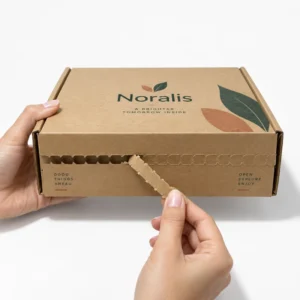
- Tear-open features: A tear strip gives the customer a clear opening point.
- Internal fitments: Inserts or dividers can hold smaller products in position or keep components apart.
Which cardboard construction should you choose?
In UK packaging, “cardboard” often covers several paper-based box materials. For postal use, corrugated cardboard usually provides the most practical structure because the fluted centre adds rigidity between outer liner papers.
Single-wall corrugated board suits many everyday ecommerce orders. Fine-flute constructions can help when a business wants a neater profile and a good print surface. Heavier or more fragile goods may need a stronger corrugated specification, so the product should guide the board choice.
Brown kraft gives Cardboard Postal Boxes a natural paper finish, while a white liner gives colour artwork a brighter base.
Meanwhile, buyers who want to compare the wider material range can review Cardboard Boxes. For products where flute choice and board performance drive the decision, Corrugated Boxes provide another useful comparison.
Custom sizing, closures and internal support
Custom Cardboard Postal Boxes work best when the internal dimensions follow the packed product. Measure the item first, then include any inner carton, tissue, sleeve, protective wrap or insert.
Common customisation choices include:
- custom length, width and depth;
- hinged mailer lids or other suitable postal structures;
- tuck-front and locking closures;
- self-seal strips where appropriate;
- tear strips for easier opening;
- cardboard inserts or dividers;
- inside print, outside print or both.
For example, a book may only need a close-fitting corrugated shell. Meanwhile, a small gift set may need a divider to stop components moving into each other. A bottle or fragile item can require extra cushioning.
Do not add an insert simply because the box allows one. Instead, use it when it improves product control, protection or presentation.
Businesses that specifically want the familiar hinged, self-locking ecommerce format can compare Custom Mailer Boxes alongside this material-led cardboard range.
Printing Cardboard Postal Boxes for your brand
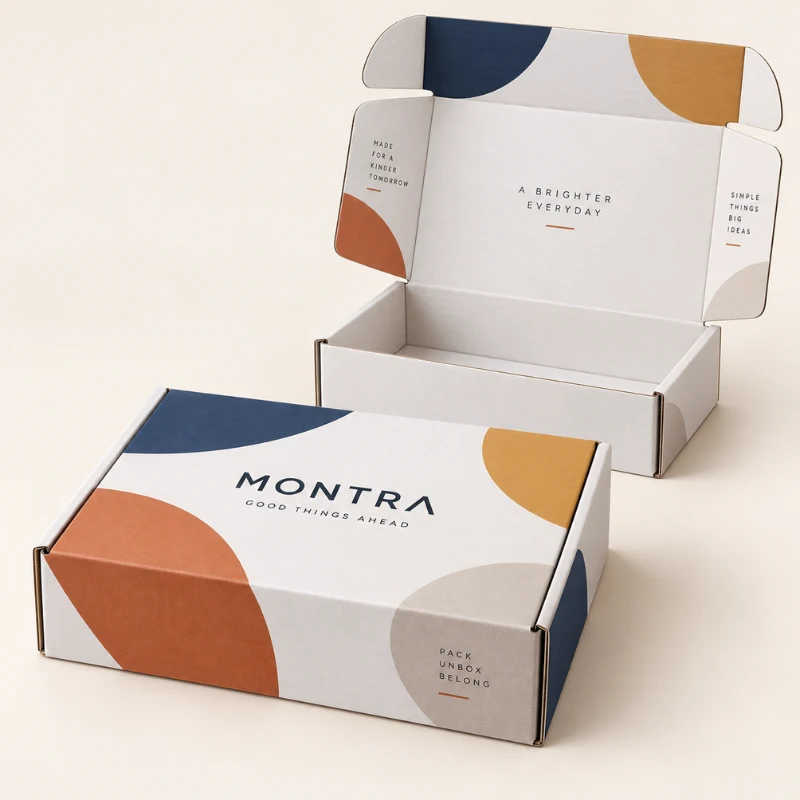
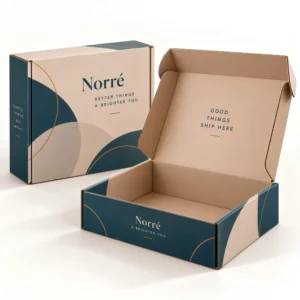
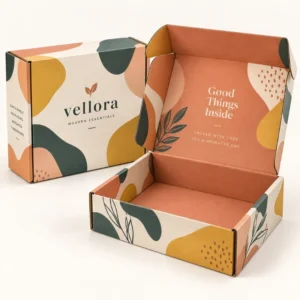
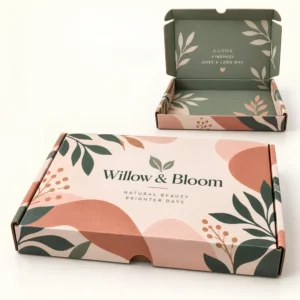
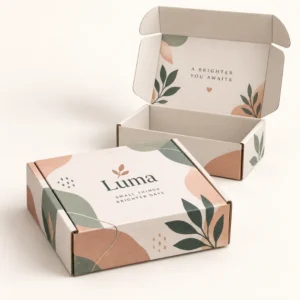
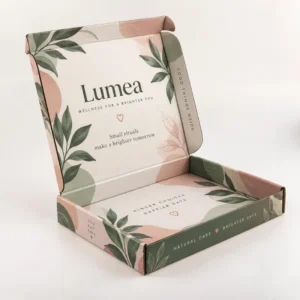
The lid usually carries the main branding, while side panels can hold shorter messages or simple graphics. Inside print can add another brand touch without crowding the outside.
Digital printing can suit shorter custom runs and detailed artwork. Flexographic printing often works well for simpler graphics on corrugated board. Litho-lamination can support finer reproduction where a project needs a smoother printed face.
CMYK suits full-colour artwork. Pantone references can also help when a particular brand colour needs closer control, although the board surface and print process still affect the final result.
Finishes should have a clear purpose. Matt or gloss lamination can change the surface appearance, while foil, spot UV, embossing or debossing may suit selected presentation-led projects. However, simple printed cardboard postal packaging often works well without several added finishes.
Free design support helps buyers place artwork around folds, tuck panels and safe print areas. Therefore, the final design can work with the structure instead of fighting against it.
Where cardboard postal packaging makes sense
Cardboard postal boxes suit a wide range of products because businesses can alter the footprint, depth and internal support. However, the contents should always decide the final specification.
Common applications include:
- books, notebooks and printed materials;
- clothing, socks and textile accessories;
- stationery sets, cards and craft products;
- phone cases, cables and small electronic accessories;
- grooming products and non-fragile retail goods;
- subscription packs, sample kits and promotional items;
- small gift sets with suitable internal protection.
A soft clothing item may need little internal support. By contrast, a hard or fragile item can need an insert, cushioning or stronger corrugated board. In addition, several small products inside one box may need dividers.
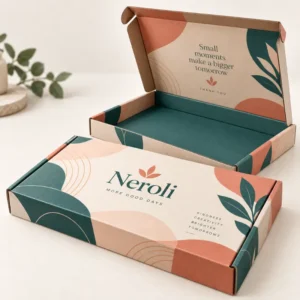
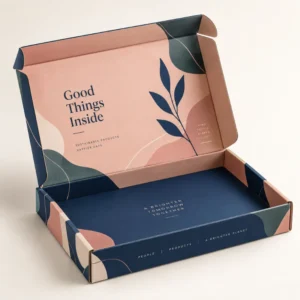
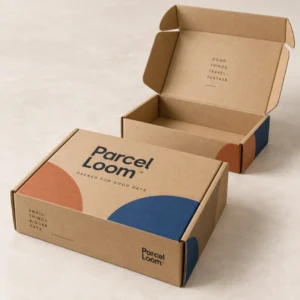
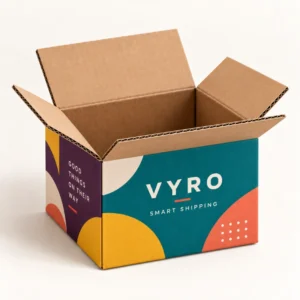
Cardboard Postal Boxes can carry branding on the outside and a short message or secondary graphic inside.
Why choose Custom Postal Boxes?
In-house manufacturing gives Custom Postal Boxes direct control over the approved dimensions, structure and print specification during production. That helps when a business needs a particular depth, closure or internal fit instead of a standard stock carton.
Free design support also helps with artwork preparation. The team can review how the logo, colours and key graphics sit across the box panels before production starts.
After production, fast and free UK delivery supports the final stage of the order. The exact production schedule depends on the quantity, structure, print method and finishing requirements.
How to order custom Cardboard Postal Boxes
- Measure the packed product: Include any sleeve, tissue, cushioning or inner packaging.
- Confirm the quantity: This helps determine a suitable production and print route.
- Explain the delivery method: Mention any postal or courier size requirement that matters.
- Choose the board: Match the corrugated construction and liner to product weight, handling and artwork.
- Confirm the structure: Decide on the lid, locking method, self-seal strip or tear-open feature where relevant.
- Plan internal support: Add an insert or divider only when the product needs it.
- Share the artwork: Provide logos, colours and inside or outside print requirements.
- Review the quotation and proof: Check dimensions, material, print and finish before approval.
- Approve production: The team starts manufacturing after you confirm the specification and artwork.
- Receive the finished order: Custom Postal Boxes dispatches the completed boxes for UK delivery.
Frequently asked questions
What type of cardboard works best for postal boxes?
Corrugated cardboard works well for most postal applications because its fluted structure adds rigidity without creating a solid, heavy pack. The best grade depends on product weight, size and fragility. Light ecommerce items often need less board strength than heavier or harder products.
Can I order Cardboard Postal Boxes in custom sizes?
Yes. We can size the box around the packed product, including any tissue, inner pack, insert or cushioning. A closer fit can reduce unused space and help control movement during delivery. Share the packed dimensions rather than the bare product size.
Can you print my logo on cardboard postal boxes?
Yes. We can print logos, brand colours, text and other artwork on suitable cardboard surfaces. You can also discuss inside printing for structures that support it. Clear artwork usually works best around folds and locking areas, so plan those features with the dieline.
Are cardboard postal boxes suitable for ecommerce orders?
Yes. Corrugated cardboard postal packaging suits many ecommerce products because it combines a rigid outer structure with practical custom sizing. The correct board and internal support depend on the product. Fragile goods may need cushioning or a fitted insert in addition to the outer box.
Do I need inserts inside a postal box?
Not always. A close-fitting box may give a soft or non-fragile product enough control without an insert. Use a divider or fitment when you need to position an item, separate components or add support. Plan that insert with the box dimensions from the start.
Can cardboard postal boxes use self-seal and tear strips?
Yes. We can add these features to suitable postal structures. A self-seal strip can speed up packing, while a tear strip gives the recipient a clear opening point. The exact arrangement depends on the chosen dieline and opening experience.
What information should I provide for a quotation?
Send the packed product dimensions, required quantity, preferred box style, print details and any insert or closure requirements. Also mention the delivery method if a postal size limit matters. If you do not know the board specification, explain the product weight and fragility.
Request a quote for Cardboard Postal Boxes
Share your packed product dimensions, quantity, artwork and any closure or insert requirements with Custom Postal Boxes. We can then develop Cardboard Postal Boxes around the actual item, confirm a suitable corrugated structure and prepare the print specification for your order.








Reviews
There are no reviews yet.