
slide drawer box packaging
Showing the single result
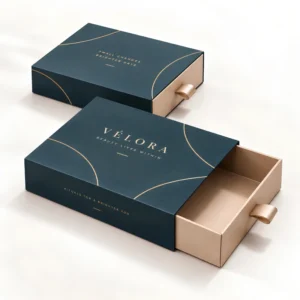
slide drawer box packaging is a two part pack with a firm outer sleeve and an inner tray that slides out to reveal the product, creating a slower and more deliberate opening than a lift off lid. Custom Postal Boxes makes drawer style packaging in house in Wolverhampton, with free design support and free UK delivery.
How slide drawer box packaging works
The sleeve forms a complete case around the tray, and the tray carries the product. Because the two parts are made separately, slide drawer box packaging lets you print the sleeve and the tray in different colours or finishes, so the reveal can contrast with the outside. The sliding action depends on a precise fit, often called the friction fit, where the tray moves smoothly without sticking or falling out when the pack is tipped. Formats sit alongside our custom drawer boxes and custom rigid boxes.
Tray pulls, stops and opening styles
A ribbon pull gives an elegant way to draw the tray out, and a thumb notch cut into the sleeve or tray front suits a cleaner, minimal look. A sleeve closed at one end acts as a stop, so the tray cannot slide right through, while an open ended sleeve lets the tray pass either way for light products. Tell the team how the pack will be displayed and opened, because the pull position affects both the artwork layout and the way customers handle the box.
Getting the sliding fit right
The clearance between tray and sleeve is set by board thickness and the paper wrap, and it is measured in fractions of a millimetre. A tray wrapped in a textured paper needs a little more room than a smooth one. Approving a made up sample in the final materials is the reliable way to confirm the slide before a full run.
Uses, inserts and print
Drawer formats suit jewellery and accessories, beauty and skincare, candles, confectionery in inner wraps, small electronics accessories and gift sets, where the reveal supports the price of the product. Divided inserts can separate a set into compartments, and a printed tray interior can carry instructions or a brand story that appears as the drawer opens. If artwork set up is new to you, our guide to the drawer box packaging template explains cut lines, bleed and safe areas in plain language. Sleeve led alternatives appear among our custom sleeve boxes.
Ordering drawer packaging with confidence
Share the product dimensions and weight, the insert layout you need and the finish you want on sleeve and tray. Pricing depends on size, material and quantity, and low minimum order quantities suit launches, limited editions and gift ranges. Reducing unnecessary packaging material is also part of good pack design, and the GOV.UK extended producer responsibility collection sets out the wider UK context. Request a quote to discuss a sample in your final board and print.
FAQs about slide drawer box packaging
What is the difference between a drawer box and a two piece box?
A drawer box slides open, with a tray moving inside a fixed sleeve, while a two piece box lifts apart into a separate lid and base. The drawer keeps both parts together in use, which suits retail handling and gift opening where a loose lid could be misplaced.
Can the sleeve and tray be printed in different designs?
Yes. The sleeve and tray are made as separate pieces, so each can carry its own colour, pattern or finish. Many brands keep the sleeve calm and print a stronger colour or message inside the tray for contrast at the reveal.
How do customers open a slide drawer box?
Most designs use a ribbon pull attached to the tray or a thumb notch that lets a fingertip draw the tray out. The right choice depends on the size and weight of the tray and on the look you want for the finished pack.
Can drawer packaging hold a set of several products?
Yes. Divided inserts inside the tray can separate items such as a candle and matches, a bottle and a refill or pieces of jewellery. Share the size of every item so compartments can be planned around the largest piece first.
Why does the sliding fit need a sample?
The fit depends on board thickness, paper wrap and finish, and tiny differences change how the tray moves. A sample made in the final materials confirms the tray slides smoothly without sticking or slipping out before you commit to a full run.