

Description
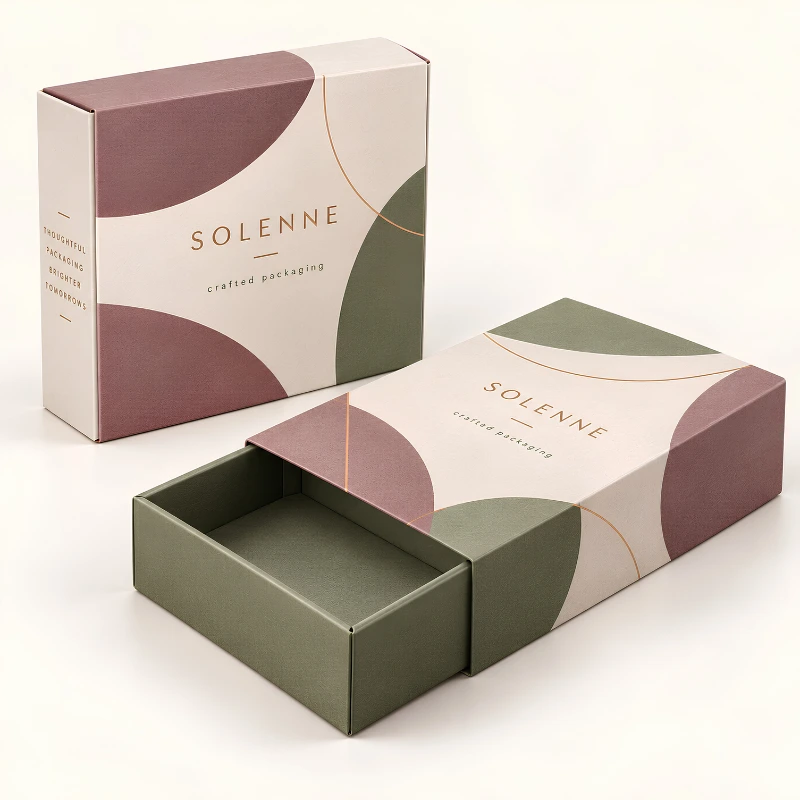
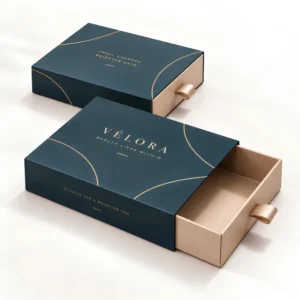
Custom sleeve boxes use an outer printed sleeve with an inner tray or base that slides in and out. They suit UK brands that want a controlled reveal, clear branding and a tidy way to present retail or gift products. The two-part format works well when presentation matters as much as practical product containment.
Why Custom Sleeve Boxes Work for Branded Products
A sleeve box gives the customer two stages to open. First, they remove or slide the outer sleeve. Then the inner tray reveals the product. That simple movement can make the presentation feel more considered.
The outer sleeve also creates useful print space. Brands can place a logo, product name, campaign artwork or variant information on it while keeping the tray restrained. As a result, businesses with several flavours, scents or product ranges can create visual differences without changing every part of the pack.
Fit matters here. A sleeve that grips too tightly can be awkward to open, while one that sits too loosely can look untidy. Therefore, the tray dimensions, board thickness, crease positions and sleeve clearance need to work together.
Practical Features That Affect Everyday Use
The best specification depends on what the box needs to hold and how customers will handle it. Useful features can include:
- Two-piece construction: the sleeve provides the branded surface while the tray supports and presents the contents.
- Made-to-size dimensions: accurate sizing helps the sleeve move smoothly while keeping the tray aligned.
- Optional internal fitments: a card insert or divider can help position small products, sets or accessories.
- Flexible branding space: the sleeve can carry most of the visual design, which suits seasonal ranges or product variants.
- Supply format: the best flat or assembled option depends on the chosen construction and packing process.
Unlike a conventional tuck carton, a tray-and-sleeve box uses the outer section as its sliding cover. That changes both the opening action and artwork planning.
Which Materials Suit Custom Sleeve Boxes?
Paperboard is a common choice because it creases cleanly and provides a smooth surface for graphics. White board suits bright colour reproduction, while kraft board can give the pack a more natural, uncoated appearance. The correct grade should match the finished size, product weight and required stiffness.
The inner tray may use folded paperboard for lighter retail products. However, heavier or more presentation-led packs may need a sturdier tray construction. In some cases, corrugated board can make sense where extra structural support is required. The material should follow the product rather than a fixed template.
A well-sized pack can also reduce unnecessary empty space and avoid adding board that serves no practical purpose. UK businesses reviewing specifications should be aware of current UK packaging waste responsibilities when making wider packaging decisions.
What Can You Customise on a Sleeve Box?
Customisation starts with fit. Length, width and depth affect how the tray carries the product and how the sleeve moves over it. From there, the structure can be adjusted around the presentation required.
Common options may include:
- custom tray and sleeve dimensions;
- a full-depth or shallower inner tray;
- thumb notches or finger cut-outs where suitable;
- die-cut windows in the sleeve;
- internal card inserts or dividers;
- contrasting colours between the sleeve and tray;
- printing on selected internal surfaces;
- different sleeve widths for partial or near-full coverage.
Custom box sleeves can also use a lighter wrap-around format. A printed box sleeve can wrap around an existing carton instead of using a separate tray. This can work for promotions, gift boxes or product variants where the main box already provides the required protection. However, it is structurally different from a true sleeve-and-tray box.
Printing and Finishes for the Sliding Format
The sleeve usually carries the strongest visual branding, so print choices should focus on clarity and how the design behaves across folds. CMYK printing suits full-colour artwork and photographic graphics. Pantone colour matching can help where consistent brand colours matter. Digital or lithographic production may be appropriate depending on quantity, artwork and specification.
Finishing should support the design. Matt or gloss lamination changes both appearance and surface feel, while soft-touch lamination can create a softer tactile finish where the material suits it.
Foil stamping can highlight a logo or small detail. Spot UV adds localised contrast, while embossing or debossing creates physical depth. Because a sleeve moves against the tray, finishes near high-contact edges should be planned carefully so the pack still opens and closes cleanly.
Where Sleeve Packaging Makes Commercial Sense
Custom sleeve boxes suit products that benefit from a deliberate reveal and organised presentation. Typical uses include confectionery gift sets, candles, fragrance or grooming products, jewellery, accessories, stationery, small tech accessories, promotional kits and curated retail sets.
They can also support ranges with repeated base dimensions. For example, a business may keep the same tray format across several products, then vary the printed sleeve to identify each version. This keeps each SKU distinct without redesigning the whole pack.
For ecommerce ranges, sleeve boxes can sit inside suitable outer shipping packaging when transit protection requires another layer. Businesses that send products directly by post may therefore want to compare this format with custom mailer boxes before deciding which structure should perform the shipping role.
Why Order from Custom Postal Boxes?
A sleeve box depends on accurate interaction between two parts, so production control matters. Our in-house manufacturing supports closer management of cutting, creasing, print alignment and sleeve-to-tray fit. This matters when windows, inserts or artwork need to align with the inner section.
Free design support can help with artwork placement on the dieline, folds and narrow side panels before production. This reduces avoidable layout problems and helps you prepare artwork that works with the structure rather than against it.
Once the specification is approved and manufactured, we arrange fast and free UK delivery. Delivery timing depends on the final job requirements, so discuss deadlines when requesting your quotation.
How to Order Custom Sleeve Boxes
- Describe the product: tell us what the box will hold and how customers should open it.
- Share the dimensions: provide product measurements or the required finished size so the tray and sleeve can be planned together.
- Confirm the quantity: this helps determine the production approach and quotation.
- Choose the material: select board based on weight, presentation, print needs and stiffness.
- Set the print and finish: confirm colours, artwork coverage and any decorative finishes.
- Review artwork: use the supplied layout or free design support to position artwork correctly.
- Approve the specification: check the structure, artwork and quotation before manufacturing starts.
- Manufacturing and delivery: we produce the order to the agreed specification and arrange UK delivery.
Frequently Asked Questions
What are custom sleeve boxes?
Custom sleeve boxes are two-part packs made from an outer sleeve and an inner tray or base. The sleeve slides over the tray, so the customer reveals the product by pulling or pushing the inner section out. They are commonly used for retail, gifting and presentation-focused products where controlled opening and strong branding matter.
Are sleeve boxes the same as drawer boxes?
They are closely related, but terminology varies. Many suppliers use “sleeve box”, “tray and sleeve box” and “drawer box” for similar sliding structures. However, some drawer boxes use pull tabs, ribbons or rigid constructions, while simpler sleeve boxes may use folded paperboard. The final specification matters more than the label.
Can the sleeve and tray use different colours?
Yes. Contrasting colours can make the sliding reveal more noticeable and separate exterior branding from the internal presentation. The two parts can also carry different artwork. However, the print process, board and finish should be confirmed together so both sections work visually as one pack.
Can you add an insert inside the tray?
Yes, where the product and box structure allow it. Card inserts or dividers can help hold small items in position and create a more organised presentation. The insert should be designed around the real product dimensions because a poor fit can create movement, pressure points or wasted space.
Can custom sleeve boxes have windows?
Yes, many paperboard sleeve designs can include a die-cut window if enough material remains to keep the sleeve stable. A window can reveal the tray colour or part of the product. Its position should be planned early because large or poorly placed cut-outs can weaken narrow panels.
Which printing method is best for sleeve packaging?
It depends on the artwork, quantity, board and finish. Digital printing can suit certain shorter runs, while lithographic printing can suit detailed, consistent production at larger quantities. Full-colour CMYK works for many designs, while Pantone matching may suit projects that require specific brand colours.
Are sleeve boxes suitable for posting on their own?
Usually, a presentation sleeve box should not automatically be treated as a postal shipping box. The sliding format focuses on product presentation, while courier handling may require stronger outer protection. If the order will travel through a postal network, pack the sleeve box inside a suitable mailer or shipping carton based on the product.
Request a Quote for Custom Sleeve Boxes
Share your product dimensions, quantity, preferred material and artwork requirements with Custom Postal Boxes. We can then help define the tray-and-sleeve structure, choose suitable print and finishing options, and prepare a quotation for custom sleeve boxes made around the way your product needs to be presented.












Reviews
There are no reviews yet.